
Why Crawl Space Encapsulation Is Essential for Warner Robins Homes
Why Crawl Space Encapsulation Is Essential for Warner Robins Homes
Homeowners in Warner Robins know how quickly Georgia’s hot summers, heavy humidity, and sudden rainstorms can affect a house. One of the most overlooked areas is the crawl space. Because it sits below the home and is often out of sight, problems can build up for months or even years before anyone notices.
That is why crawl space encapsulation is so important. By sealing off the crawl space from outside moisture, pests, and outdoor air, homeowners can protect their property from damage, improve indoor comfort, and support long-term energy efficiency.
What Is Crawl Space Encapsulation?
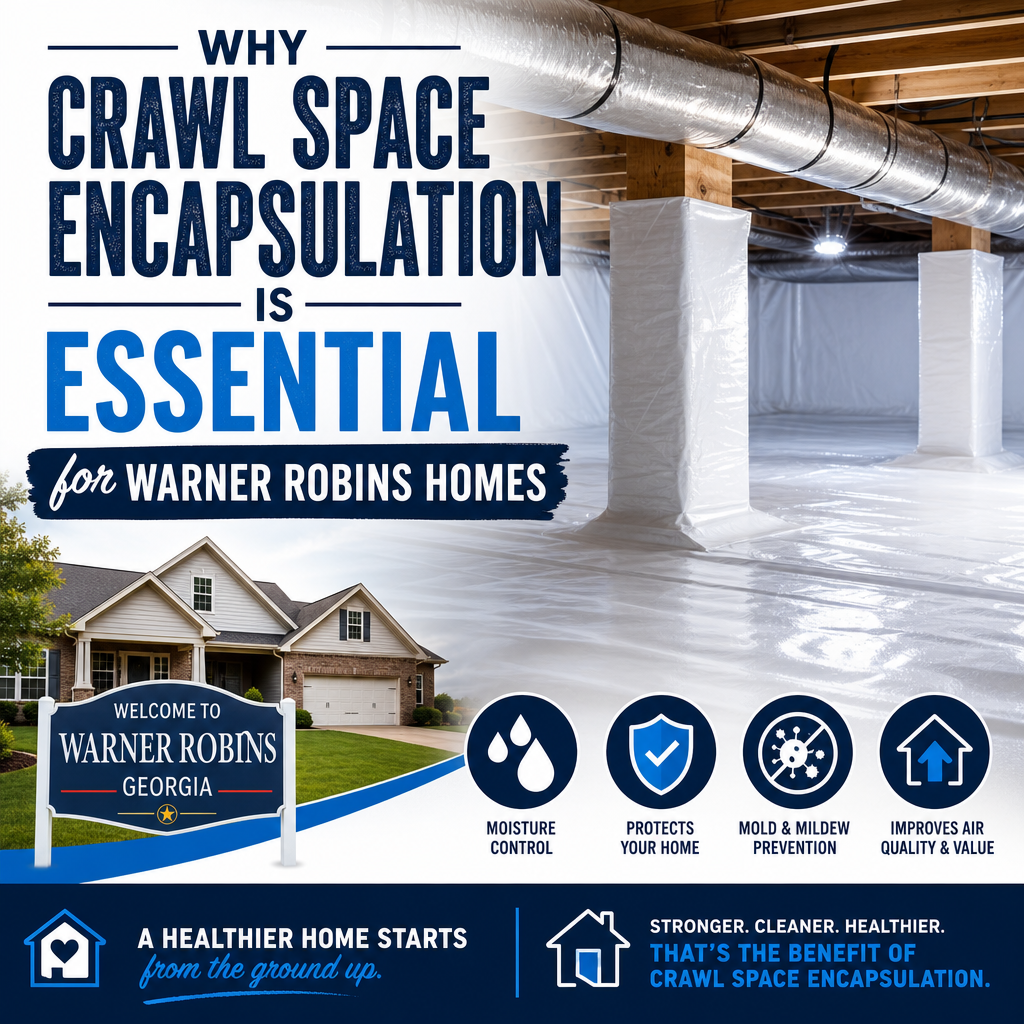
Crawl space encapsulation is the process of sealing the crawl space with a vapor barrier, insulation, and moisture control materials. In many cases, it also includes sealing vents, installing a dehumidifier, and addressing drainage issues.

The goal is simple: keep outside moisture and air from entering the crawl space.
In a climate like Warner Robins, that matters a lot. High humidity can enter through vents, open gaps, or exposed dirt floors and collect inside the crawl space. Once moisture gets in, it can lead to mold, wood rot, odors, and poor air quality throughout the home.
Why Warner Robins Homes Benefit So Much
Warner Robins experiences warm, humid weather for much of the year. That creates the perfect environment for moisture problems in crawl spaces. Even if a home looks fine from the outside, the space underneath may be dealing with hidden damage.
Here are some of the biggest reasons encapsulation is essential in this area:
1. It Helps Control Moisture
Moisture is the number one threat to crawl spaces. When humid air enters the crawl space, it can condense on cooler surfaces like floor joists, ductwork, and pipes. Over time, this moisture can weaken building materials and create ideal conditions for mold growth.
Encapsulation helps block that moisture before it causes damage.
2. It Reduces Mold and Mildew Risk
Mold thrives in damp, dark spaces. A crawl space that is open to outside air often becomes a breeding ground for mold and mildew, especially during humid Georgia summers.
Once mold forms below the home, it can spread musty odors and affect indoor air quality. In some cases, mold spores can circulate through HVAC systems and reach living areas. Encapsulation helps create a cleaner, drier environment that is far less likely to support mold growth.
3. It Can Improve Indoor Air Quality
Many homeowners are surprised to learn that a large portion of the air inside a house can come from the crawl space. If that space is damp, musty, or contaminated, those conditions may affect the air your family breathes.
By sealing and controlling the crawl space, you can reduce the chances of allergens, mold spores, and unpleasant odors entering the home.
4. It Protects Structural Components
The wooden supports, beams, and subflooring above a crawl space are vulnerable to moisture damage. Over time, excess humidity can lead to:
- Wood rot
- Warping
- Sagging floors
- Rusted metal components
- Pest damage
Encapsulation helps preserve these important structural elements by keeping the environment below the home dry and stable.
5. It Can Improve Energy Efficiency
An open crawl space allows hot, humid air to move freely under the home. That makes it harder for heating and cooling systems to work efficiently. In the summer, your air conditioner may need to run longer to maintain comfortable temperatures.
Encapsulation can help reduce this burden by creating a more controlled environment. This may lead to lower energy use and more consistent temperatures inside the home.
Signs Your Crawl Space May Need Encapsulation
Not sure whether your home needs crawl space encapsulation? There are several warning signs to watch for:
- Musty smells inside the home
- High indoor humidity
- Visible mold or mildew
- Condensation on pipes or ductwork
- Soft, uneven, or sagging floors
- Standing water or damp soil in the crawl space
- Pest activity near the foundation
- Increased allergy symptoms indoors
If you notice one or more of these issues, the crawl space may already be affecting the rest of the home.
What the Encapsulation Process Usually Includes
Every home is different, but a typical encapsulation project may involve several key steps:
-
Inspection and moisture assessment
A professional checks for water intrusion, mold, ventilation issues, and structural concerns. -
Sealing and prep work
Open vents, cracks, and gaps are sealed to reduce outside air movement. -
Installing a vapor barrier
Heavy-duty liner is placed across the crawl space floor and sometimes up the walls to block ground moisture. -
Adding dehumidification
A crawl space dehumidifier may be installed to keep humidity at a safe level. -
Addressing drainage problems
If needed, sump pumps or drainage systems are added to prevent water from collecting under the home.
This process creates a much drier, healthier environment beneath the house.
A Smart Investment for Long-Term Home Protection
Crawl space encapsulation is not just a maintenance upgrade. For Warner Robins homeowners, it is a practical investment in the overall health of the home. By reducing moisture, preventing mold, and protecting structural materials, encapsulation can help avoid expensive repairs later on.
It can also make the home more comfortable year-round. Fewer odors, better air quality, and more stable indoor temperatures are benefits many homeowners notice after the work is done.
Conclusion
For homes in Warner Robins, crawl space encapsulation is essential because it addresses one of the biggest threats to local houses: moisture. With Georgia’s humid climate and frequent weather changes, crawl spaces are especially vulnerable to mold, pests, rot, and energy loss.
Encapsulating the crawl space helps create a cleaner, drier, and more efficient home from the ground up. For homeowners looking to protect their property and improve everyday comfort, it is one of the smartest steps they can take.