
How Poor Crawl Space Ventilation Affects Air Quality
Understanding Your Home’s Hidden Foundation
When we think about home maintenance, our minds usually drift to obvious chores like cleaning gutters, mowing the lawn, or servicing the HVAC system. However, the hidden spaces beneath our feet often have the most dramatic impact on our daily living environment. The crawl space, in particular, plays a critical role in regulating the overall ecosystem of your house. When ventilation beneath your floorboards is neglected or improperly managed, it can trigger a cascade of issues that directly compromise the air you and your family breathe every single day.
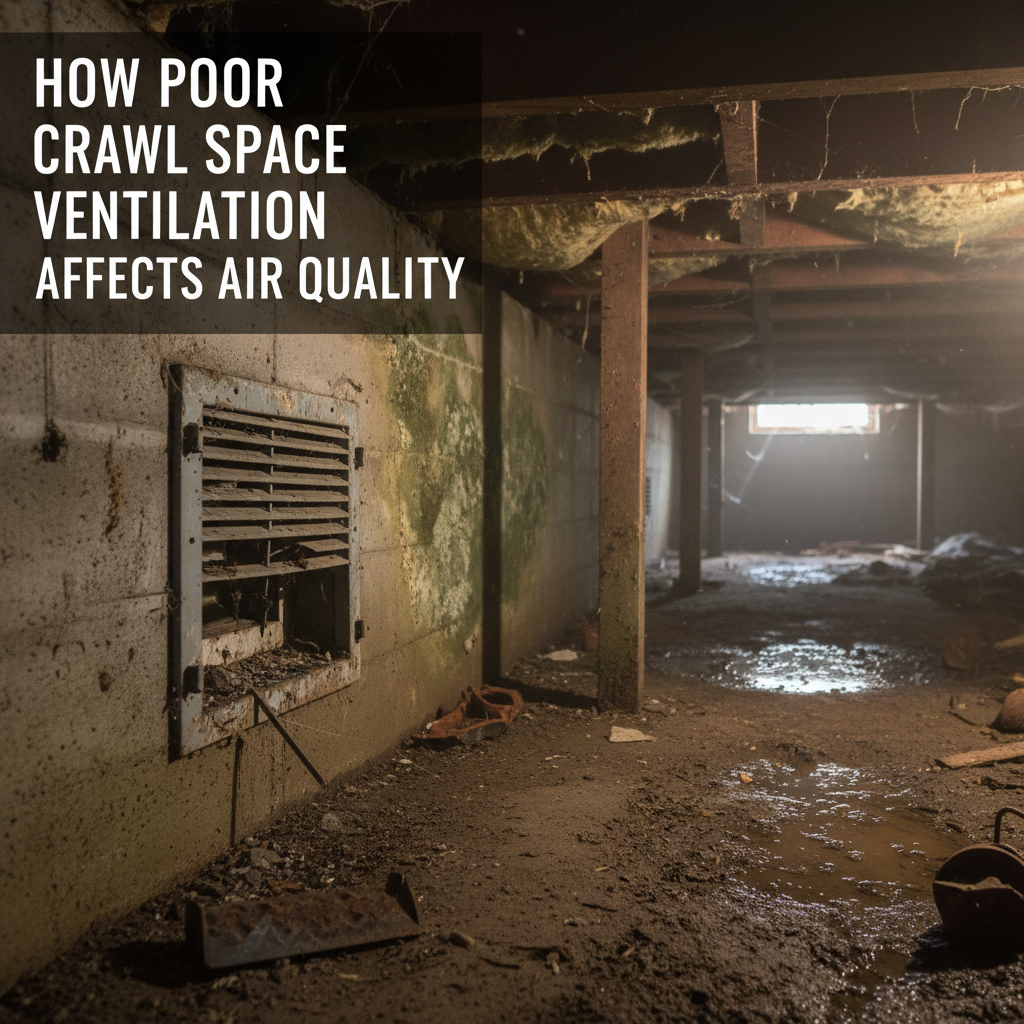
[IMAGE: A dark, damp crawl space showing signs of poor ventilation and moisture buildup.]
The Stack Effect: How Air Moves From the Ground Up
Many homeowners assume that whatever happens in the crawl space stays in the crawl space. Unfortunately, physics tells a very different story. Through a phenomenon known in the building industry as the ‘stack effect,’ warm air naturally rises through a house, escaping out through the upper levels and the roof. As this warm air departs, it creates a subtle vacuum at the lowest levels of the home, pulling replacement air upward from the basement or crawl space.

This means that up to 50 percent of the air you breathe on your main living level originates directly from beneath your house. If that subterranean space is damp, stagnant, or filled with mold spores, those pollutants are continuously drawn directly into your living quarters. Understanding this invisible connection is the first step toward protecting your indoor environment.
Common Signs of Ventilation Failures
- Persistent musty odors drifting up through floor vents or ground-floor rooms.
- A noticeable increase in allergy symptoms or respiratory irritation among household members.
- Visible condensation pooling on foundation walls or metal ductwork.
- Sagging insulation or wood rot discovered during routine inspections.
The Dangers of Moisture and Mold Growth
A poorly ventilated sub-floor area acts as a natural trap for humidity. Without adequate airflow, moisture from the surrounding earth evaporates and has nowhere to go. This creates a warm, humid microclimate that serves as a breeding ground for mold, mildew, and fungi. Once mold colonies establish themselves on floor joists and subflooring, they release millions of microscopic spores into the air. These spores easily hitch a ride on the upward air currents generated by the stack effect, spreading throughout your home and lowering your indoor air quality significantly.
[IMAGE: A technician inspecting a crawl space with mold and moisture issues.]
Health Impacts You Shouldn’t Ignore
Breathing air laced with mold spores, dust mite feces, and mildew can take a serious toll on human health. Vulnerable populations, such as young children, the elderly, and anyone with pre-existing conditions like asthma or chronic allergies, are particularly sensitive. Symptoms of poor indoor air quality often mimic chronic colds or seasonal allergies, including frequent sneezing, coughing, watery eyes, skin rashes, and unexplained headaches that seem to vanish when you leave the house for the day.
Solutions for Cleaner, Healthier Air
Fortunately, you do not have to live with the consequences of stagnant sub-floor conditions. Addressing ventilation issues can dramatically transform your home’s atmosphere. Depending on your climate and foundation type, solutions might include sealing foundation vents to keep humid summer air out, installing a high-capacity dehumidifier, or investing in a complete encapsulation system complete with a heavy-duty vapor barrier.
By taking control of the humidity and airflow beneath your living space, you effectively cut off pollution at the source. Regular inspections and proactive maintenance will ensure your home remains a safe, breathable sanctuary for years to come.