

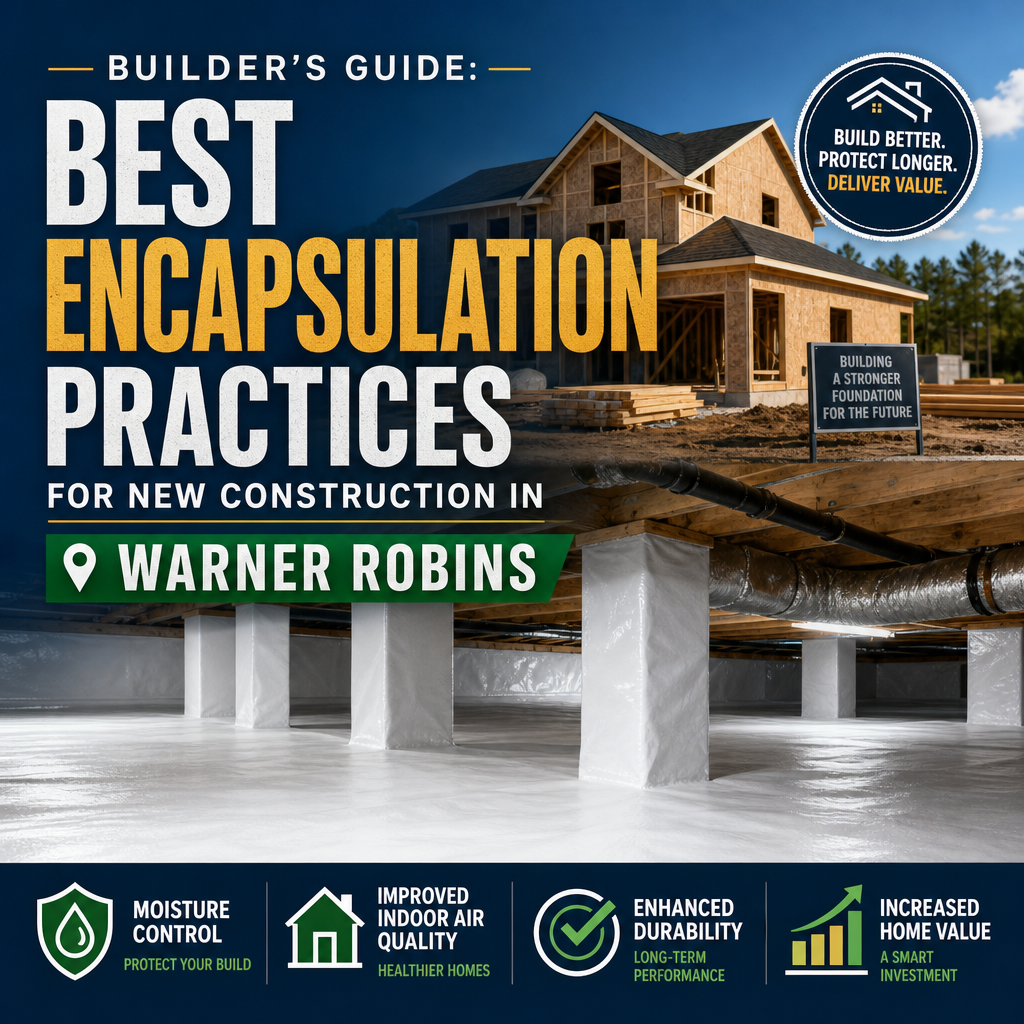
Builder’s Guide: Best Encapsulation Practices for New Construction in Warner Robins
Builder’s Guide: Best Encapsulation Practices for New Construction in Warner Robins
New construction gives builders a valuable advantage: the chance to control the home’s moisture, air quality, and energy performance from the ground up. In Warner Robins, where hot summers, humid air, and seasonal rain can all put pressure on a building envelope, proper encapsulation is one of the smartest investments a builder can make. When done right, it helps protect the structure, improve comfort, and reduce long-term maintenance problems.
This guide covers the best encapsulation practices for new construction in Warner Robins, with a focus on creating a durable, efficient, and moisture-resistant home from day one.
Why Encapsulation Matters in Warner Robins
Encapsulation is the process of sealing off a crawl space, attic, or other vulnerable area to control air movement and moisture. In a climate like Warner Robins, that matters more than many builders realize.

Warm, humid outdoor air can sneak into unsealed spaces and condense on cooler surfaces. Over time, that moisture can lead to:
- Mold growth
- Wood rot
- Poor indoor air quality
- Insulation damage
- Higher energy bills
For new construction, the goal is to stop these problems before they begin. A well-encapsulated home performs better, lasts longer, and is easier for homeowners to maintain.
Start with a Strong Building Envelope
Encapsulation works best when the overall building envelope is planned correctly from the start. That means coordinating framing, insulation, air sealing, and moisture control as one system.
Focus on Air Sealing Early
Before insulation is installed, seal gaps and penetrations around:
- Plumbing and electrical openings
- Framing joints
- Recessed fixtures
- HVAC penetrations
- Rim joists and sill plates
Even small leaks can allow humid air to enter hidden areas. Careful air sealing helps create the foundation for effective encapsulation.
Choose Materials That Resists Moisture
In moisture-prone environments, material selection matters. Use products designed to perform in humid conditions, including:
- Closed-cell spray foam where appropriate
- Vapor-resistant sealants
- Durable crawl space liners
- Moisture-tolerant insulation systems
The right materials help maintain a dry, stable environment inside the home.
Best Practices for Crawl Space Encapsulation
Crawl spaces are among the most important areas to encapsulate in new construction. In Warner Robins, unsealed crawl spaces can become moisture traps very quickly.
Seal the Ground First
A thick, reinforced vapor barrier should cover the crawl space floor and extend up the foundation walls. Seams should be overlapped and sealed tightly to limit moisture migration from the soil.
A proper ground barrier should:
- Cover the entire floor surface
- Be sealed at seams and edges
- Be fastened securely to walls or piers
- Be durable enough to resist tearing during construction and future access
Insulate and Seal the Foundation Walls
Instead of venting the crawl space, modern best practice is often to treat it as part of the conditioned envelope. This usually means insulating the foundation walls and sealing all major air leaks.
This approach helps:
- Reduce humidity swings
- Limit outdoor air intrusion
- Improve HVAC efficiency
- Protect floor framing from moisture exposure
Add Dehumidification or Conditioning if Needed
Even sealed crawl spaces may benefit from a dedicated dehumidifier or supply air from the HVAC system, especially in humid climates. Builders should plan for drainage, access, and serviceability so that moisture control remains effective long after construction is complete.
Don’t Overlook the Attic
Attic encapsulation is another valuable strategy in new construction, especially when energy efficiency is a top priority. A sealed attic can reduce heat gain, protect ductwork, and create a more stable thermal environment.
Seal the Ceiling Plane or Roofline Properly
Depending on the design, builders may choose to seal the attic at the ceiling plane or bring the attic into the conditioned space by insulating the roofline. Either way, air sealing is critical.
Key areas to address include:
- Top plates
- Light fixtures
- Attic access points
- Chimney and flue penetrations
- Mechanical chases
Make Ventilation Strategy Intentional
Not every attic should be treated the same way. The encapsulation strategy must match the roof design, insulation system, and HVAC layout. Builders should make sure the attic plan supports moisture control without trapping unwanted heat or humidity.
Coordinate with HVAC Installation
Encapsulation and HVAC performance go hand in hand. If the building envelope is tight but the HVAC system is not designed for it, the home may still have comfort or humidity issues.
Size and Place Equipment Carefully
A sealed home often needs HVAC equipment that is properly sized for the reduced air leakage. Oversized systems can cycle too quickly and fail to control humidity effectively.
Also consider:
- Duct placement
- Return air design
- Condensate management
- Access for maintenance
Protect Ductwork from Heat and Moisture
Ducts in unconditioned spaces are more vulnerable to performance losses. Encapsulation helps reduce those risks, but only if duct connections are sealed and insulation is installed correctly.
Plan for Drainage and Exterior Moisture Control
Encapsulation is not a substitute for good site drainage. Builders should address water management outside the home before focusing on interior moisture control.
That includes:
- Grading soil away from the foundation
- Installing gutters and downspouts
- Extending downspout discharge well away from the home
- Managing splashback near the foundation
- Avoiding standing water near crawl space or slab edges
If bulk water is not controlled outside, even the best encapsulation system can struggle.
Inspect Before Closing Up Walls
One of the biggest advantages of new construction is the ability to verify quality before drywall and finishes go in. Builders should inspect encapsulation work carefully before closing up the structure.
Check for:
- Gaps in air sealing
- Tears in vapor barriers
- Improperly sealed seams
- Missing insulation
- Uncovered penetrations
- Signs of standing water or condensation
A final inspection at this stage can prevent costly callbacks later.
Build for Long-Term Performance
The best encapsulation practices for new construction in Warner Robins are about more than energy savings. They help create homes that stay dry, durable, and comfortable in a humid climate. By focusing on air sealing, moisture control, crawl space protection, attic strategy, and HVAC coordination, builders can deliver a better home from the start.
Encapsulation is not just an extra feature. For modern construction in Warner Robins, it is a core part of building smart, building efficiently, and building for the long term.