

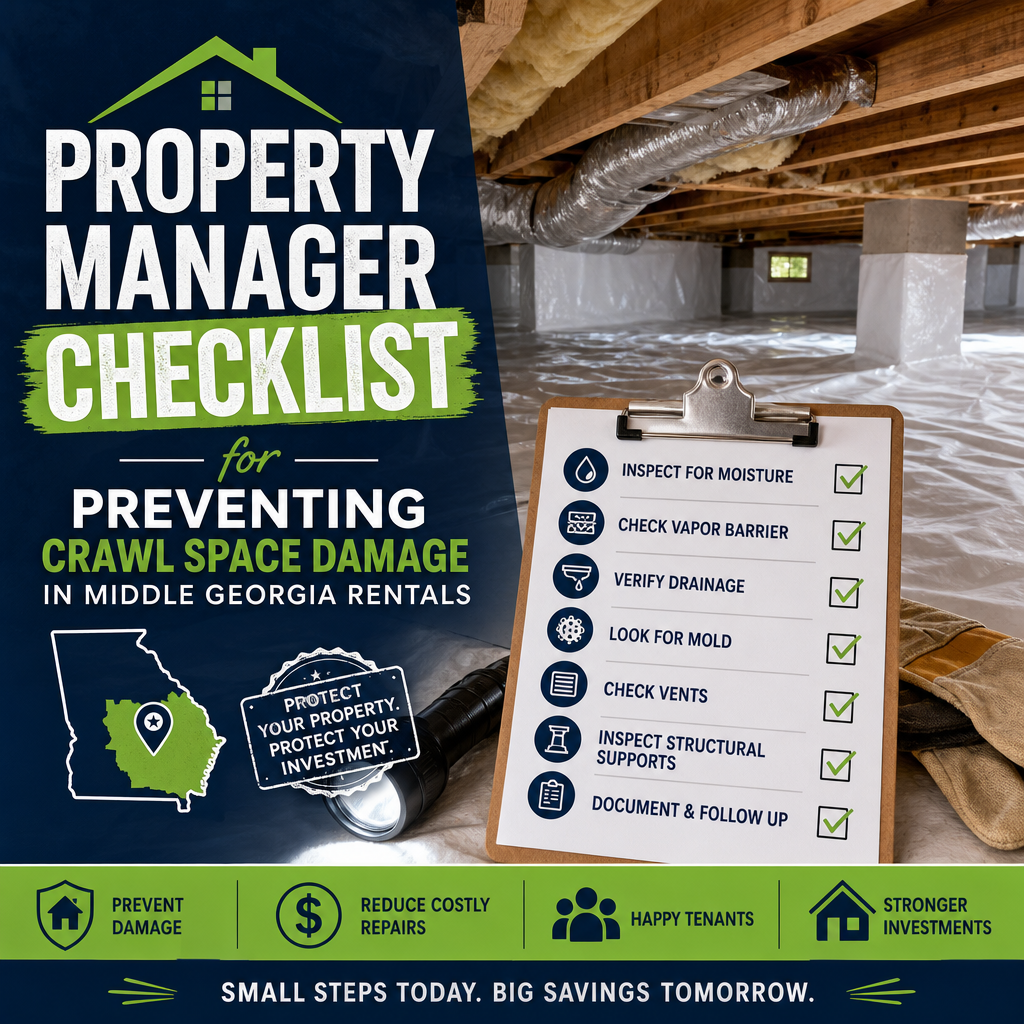
Property Manager Checklist for Preventing Crawl Space Damage in Middle Georgia Rentals
Property Manager Checklist: Preventing Crawl Space Damage in Middle Georgia Rentals
For property managers in Middle Georgia, crawl space issues can quietly become expensive problems. The region’s humid climate, heavy rains, and seasonal temperature swings create the perfect conditions for moisture buildup, wood rot, mold growth, and pest activity. A strong property manager checklist can help reduce risk, protect tenant comfort, and keep repair costs under control.
Crawl space damage often starts small. A damp smell, a little standing water, or a minor pest issue can turn into major structural concerns if ignored. The good news is that routine inspections and preventive maintenance go a long way.
Why Crawl Spaces Need Regular Attention
Crawl spaces are often out of sight, but they should never be out of mind. In rental homes, these areas can affect:

- Indoor air quality
- Foundation stability
- Energy efficiency
- Pest control
- Long-term property value
In Middle Georgia, humidity can enter through vents, cracks, and unsealed openings. When warm air meets cool surfaces, condensation forms. Over time, that moisture can damage insulation, weaken floor joists, and create ideal conditions for mold.
Property Manager Checklist for Crawl Space Protection
A practical inspection plan helps property managers catch warning signs early. Use the checklist below during routine property visits and after major storms.
1. Check for Standing Water or Excess Moisture
Water in a crawl space is always a red flag. Look for:
- Pools of water after rain
- Wet soil or mud
- Dripping pipes
- Condensation on ducts or framing
- Damp insulation
If water is present, determine the source quickly. Common causes include poor drainage, clogged gutters, leaking plumbing, or grading issues around the home.
2. Inspect for Mold and Musty Odors
A musty smell may be the first sign of hidden mold growth. Look closely at:
- Floor joists
- Subflooring
- Insulation
- Wooden supports
- HVAC components
Mold can spread fast in warm, humid conditions. Any visible growth should be documented and addressed promptly.
3. Look for Pest Entry Points
Crawl spaces often become an entry path for rodents, insects, and other pests. Check for:
- Open vents
- Gaps around pipes
- Cracks in the foundation
- Torn vapor barriers
- Chewed insulation or wiring
Seal openings as soon as possible. Even small gaps can allow pests to enter and cause damage.
4. Confirm Ventilation and Moisture Control
Proper ventilation helps reduce humidity, but the setup must match the home’s condition. Some crawl spaces benefit from vents, while others may need sealing and dehumidification.
Review whether the crawl space has:
- Working vents
- A intact vapor barrier
- A dehumidifier, if required
- Unblocked airflow
- No signs of trapped moisture
If humidity is consistently high, a professional assessment may be necessary to determine the best long-term solution.
5. Examine Insulation and Structural Components
Damaged insulation can signal moisture issues or pest activity. During inspections, check for:
- Sagging or fallen insulation
- Wet fiberglass batts
- Mold on wood framing
- Soft or rotting beams
- Warping in subfloor materials
Structural damage should be handled immediately. Early repairs are usually less expensive than waiting until the issue spreads.
6. Review Drainage Around the Property
Crawl space problems often begin outside the home. Poor drainage sends water toward the foundation and increases the chance of seepage.
Make sure to inspect:
- Gutters and downspouts
- Yard grading
- Splash blocks or drain extensions
- Low spots near the foundation
- Overflow from nearby landscaping
Redirect water away from the building whenever possible. Clean gutters and extend downspouts so rainwater does not collect near the crawl space.
7. Document Every Inspection
Good records make property management easier. Keep notes on:
- Inspection dates
- Photos of crawl space conditions
- Signs of moisture or pests
- Repairs made
- Contractor recommendations
Documentation helps track recurring issues and supports faster decision-making if claims or tenant complaints arise.
Preventive Maintenance Tips for Middle Georgia Rentals
A checklist works best when paired with routine prevention. Consider these habits:
- Schedule crawl space inspections after heavy rain
- Replace damaged vapor barriers quickly
- Keep gutters cleaned at least twice a year
- Address plumbing leaks immediately
- Trim vegetation away from the foundation
- Monitor indoor humidity if tenants report dampness
These small steps can protect both the structure and the tenant experience.
When to Bring in a Professional
Some crawl space issues require expert help. Call a qualified professional if you notice:
- Persistent standing water
- Widespread mold
- Structural sagging
- Strong odors
- Major pest infestations
- Repeated moisture problems despite repairs
Professional crawl space services can identify root causes and recommend lasting fixes such as drainage improvements, encapsulation, or moisture control systems.
Final Thoughts
A crawl space may be hidden, but it plays a major role in rental property health. For Middle Georgia property managers, prevention is far easier than dealing with extensive repairs later. By following a consistent property manager checklist, you can catch problems early, reduce tenant complaints, and protect your investment from moisture-related damage.
