
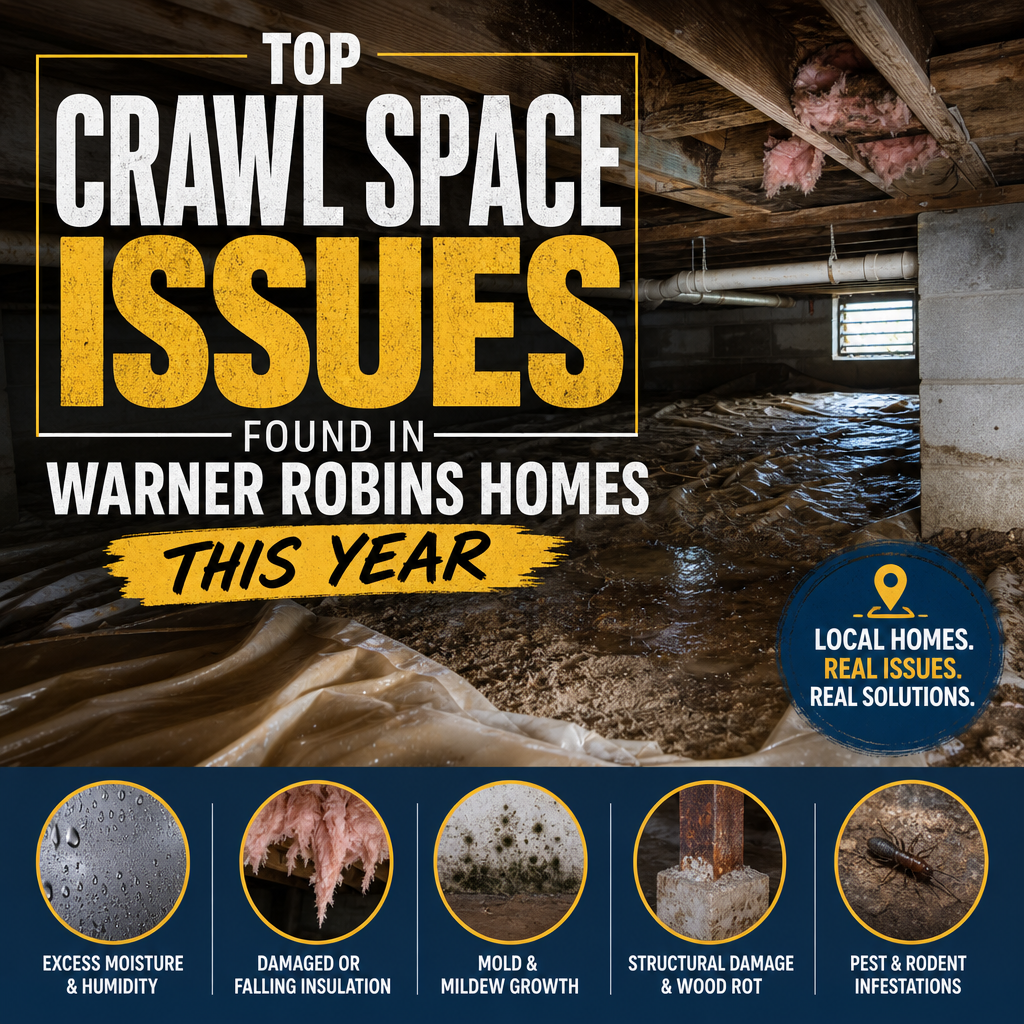
Top Crawl Space Issues Found in Warner Robins Homes This Year
Top Crawl Space Issues Found in Warner Robins Homes This Year
Crawl spaces often stay out of sight and out of mind, but they play a major role in a home’s comfort, air quality, and structural health. In Warner Robins, homeowners have seen a recurring pattern of problems this year, many tied to Georgia’s humidity, seasonal rain, and shifting soil conditions. Knowing the top crawl space issues found in Warner Robins homes this year can help you spot warning signs early and avoid expensive repairs later.
Why Crawl Space Problems Are So Common Here
Warner Robins homes face a mix of weather-related stressors that can be tough on crawl spaces. Heavy rainfall, high humidity, and warm temperatures create the perfect environment for moisture buildup. Once moisture gets into a crawl space, it can lead to mold, wood damage, pest activity, and poor indoor air quality.
Even homes that look well maintained above ground may have hidden issues below the floorboards. That is why regular inspections matter.

1. Excess Moisture and Standing Water
The most common issue homeowners report is moisture accumulation. After storms or periods of heavy rain, water can seep into crawl spaces through foundation cracks, vents, or poor drainage around the home.
Signs to watch for:
- Damp soil or puddles in the crawl space
- Musty odors inside the home
- Condensation on ducts or pipes
- Visible water stains on joists or insulation
Moisture may seem minor at first, but over time it can weaken wood framing and create the conditions for mold growth. In many Warner Robins homes, improving drainage and installing a vapor barrier makes a big difference.
2. Mold and Mildew Growth
Once moisture builds up, mold can follow quickly. This year, mold-related crawl space complaints have been especially common in homes with poor ventilation or older insulation. Mold does not just damage materials; it can also affect the air your family breathes.
Because air from the crawl space often rises into the living areas, mold spores and musty smells can spread throughout the home. That can trigger allergies, worsen asthma, and make rooms feel stale.
Common causes of mold:
- High humidity
- Leaks from plumbing
- Poor drainage
- Missing or damaged vapor barriers
Addressing mold means fixing the moisture source first. Cleaning the mold without solving the cause usually leads to the same problem returning.
3. Sagging or Rotted Floor Joists
Another major issue found in Warner Robins crawl spaces is structural damage to floor joists and support beams. When wood stays damp for too long, it begins to soften, warp, or rot. This can lead to uneven floors, bouncy spots, or even visible sagging.
Homeowners may notice:
- Floors that feel soft or unstable
- Cracks in drywall
- Doors that stick or do not close properly
- Gaps between baseboards and flooring
These symptoms often point to crawl space trouble below. If caught early, repairs may be limited to reinforcing damaged supports. If ignored, the damage can spread and become much more costly.
4. Pest Intrusion
Crawl spaces are a favorite entry point for pests. This year, many Warner Robins homeowners have dealt with rodents, termites, ants, and other insects taking advantage of open vents, gaps, and damp conditions.
Pests are drawn to crawl spaces because they offer shelter and easy access to food sources or nesting materials. Moisture makes the area even more appealing.
Common signs of pest activity:
- Droppings
- Chewed insulation or wiring
- Mud tubes from termites
- Scratching or scurrying noises
Pest problems can quickly escalate from nuisance to serious damage, especially when termites or rodents compromise wood and electrical systems. Sealing entry points and controlling moisture are key steps in prevention.
5. Damaged or Missing Insulation
Insulation problems are another frequent concern. In many crawl spaces, insulation becomes wet, falls down, or gets damaged by pests. Once that happens, the home loses energy efficiency and comfort.
Poor insulation can cause:
- Higher utility bills
- Uneven temperatures in different rooms
- Cold floors in winter
- Added humidity in the home
Wet insulation is especially problematic because it can hold moisture against wood framing and create a breeding ground for mold. Replacing damaged insulation and pairing it with moisture control can improve both comfort and performance.
6. Poor Ventilation and Humidity Imbalance
Traditional crawl space ventilation does not always work well in Georgia’s climate. In humid weather, outside air can introduce even more moisture into the crawl space instead of drying it out. This year, many homeowners have discovered that excess ventilation can actually worsen the problem.
A balanced crawl space often needs:
- Proper sealing
- Moisture control
- A vapor barrier
- Sometimes dehumidification
When ventilation is not managed correctly, the crawl space may stay damp year-round. That creates long-term risks for wood, insulation, and indoor air quality.
How to Protect Your Home
The best way to avoid major crawl space repairs is to catch problems early. A professional inspection can reveal hidden moisture, structural concerns, and pest damage before they spread.
Smart prevention steps include:
- Checking for drainage issues around the foundation
- Installing or repairing a vapor barrier
- Sealing cracks and open entry points
- Removing damaged insulation
- Monitoring humidity levels
- Scheduling regular crawl space inspections
Final Thoughts
The top crawl space issues found in Warner Robins homes this year all point to one common theme: moisture control matters. From mold and pests to structural damage and insulation failure, small crawl space problems can quickly affect the entire home.
If you notice musty odors, uneven floors, or signs of dampness, do not wait. A closer look below the house could save you time, money, and stress down the road.