
Top Signs Your Warner Robins Crawl Space Needs Immediate Attention
Top Signs Your Warner Robins Crawl Space Needs Immediate Attention
Your crawl space may be out of sight, but it should never be out of mind. In many homes, this hidden area plays a major role in indoor air quality, energy efficiency, and structural stability. When problems start below the floor, they can spread quickly throughout the rest of the house.
If you live in Georgia, recognizing the warning signs of a troubled crawl space early can help you avoid expensive repairs later. Here are the top signs your Warner Robins crawl space needs immediate attention.
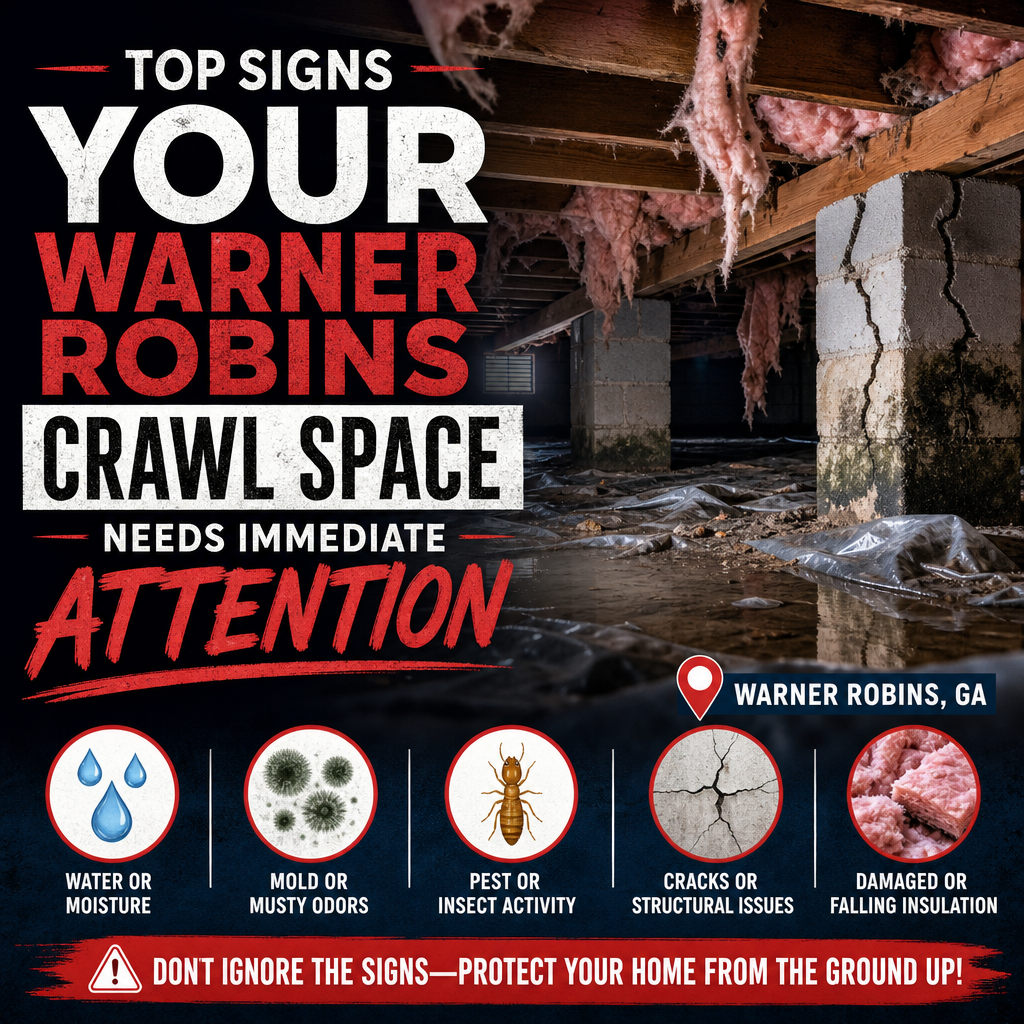
1. Musty Odors Inside the Home
One of the first signs of crawl space trouble is a persistent musty smell indoors. If your home has an earthy, damp odor that does not go away with cleaning, the source may be below your floors.

Moisture in the crawl space often leads to:
- Mold and mildew growth
- Damp insulation
- Rotting wood
- Poor air circulation
Because air from the crawl space can rise into your living areas, these odors often become noticeable in hallways, bedrooms, or closets. If the smell gets stronger after rain, that is an even bigger red flag.
2. Increased Humidity or Condensation
A healthy crawl space should not feel excessively damp. If you notice condensation on windows, water droplets on pipes, or a sticky feeling in the air, excess moisture may be entering from below.
High humidity in a crawl space can cause damage over time, including:
- Mold growth on wood framing
- Rust on metal fixtures
- Warped flooring above
- Reduced HVAC efficiency
Warner Robins weather can make moisture control especially important. Seasonal humidity and heavy rainfall can quickly worsen crawl space conditions if drainage and vapor protection are not in place.
3. Sagging or Uneven Floors
Floors that feel soft, bouncy, or uneven may be telling you something is wrong underneath. In many cases, crawl space moisture causes wooden support beams or floor joists to weaken over time.
Watch for these signs:
- Floors that slope in certain areas
- Gaps between the floor and baseboards
- A noticeable bounce when walking
- Doors that suddenly stick or do not close properly
These issues can signal structural damage that should be checked right away. The longer the problem continues, the more costly it may become to repair.
4. Visible Mold or Mildew
If you can see mold in your crawl space, the problem is already serious. Mold thrives in dark, damp environments and can spread to insulation, wood, and even nearby walls.
Signs of mold may include:
- Black, green, or white growth on wood or insulation
- A fuzzy or slimy texture
- Strong earthy odors
- Allergic symptoms when spending time indoors
Mold in a crawl space is not only a structural concern. It may also affect your family’s health, especially for anyone with asthma, allergies, or respiratory issues.
5. Standing Water or Damp Soil
Water should never pool in a crawl space. If you find standing water after a storm or notice the ground stays wet for long periods, your home may have drainage issues, plumbing leaks, or poor ventilation.
Standing water can lead to:
- Wood rot
- Pest infestations
- Mold growth
- Foundation damage
Even small amounts of moisture can become a major problem if left untreated. A damp crawl space is often a warning sign that water is entering from outside or collecting due to poor grading around the home.
6. Pest Activity
Crawl spaces can attract pests when they are dark, moist, and easy to enter. If you notice rodents, insects, or droppings, your crawl space may be offering the perfect environment for unwanted guests.
Common pest warning signs include:
- Scratching or scurrying sounds
- Droppings near vents or access points
- Chewed insulation or wiring
- Nesting materials in the crawl space
Pests can damage insulation, contaminate air quality, and create even more moisture-related issues. A neglected crawl space often becomes a breeding ground for infestations.
7. Rising Energy Bills
A damaged crawl space can affect the comfort and efficiency of your entire home. If your heating and cooling bills are climbing without a clear reason, moisture or air leaks in the crawl space could be part of the problem.
Poor crawl space conditions may cause:
- HVAC systems to work harder
- Drafts or temperature swings
- Reduced insulation performance
- Heat loss in winter and cool air loss in summer
Sealing and repairing the crawl space can often improve energy efficiency and help your home maintain a more consistent indoor temperature.
8. Cracks in Walls or Foundation
Foundation issues may begin in the crawl space and show up elsewhere in the house. If you notice cracks in interior walls, exterior brick, or around the foundation, do not ignore them.
Look for signs such as:
- Horizontal or stair-step cracks
- Separating drywall seams
- Gaps around windows or doors
- Shifting or sinking floors
While not every crack points to a major emergency, combined with moisture or sagging floors, they may indicate serious crawl space or foundation problems.
Why Fast Action Matters
A crawl space problem rarely stays small for long. Moisture, pests, mold, and structural damage can spread quickly and affect your home’s safety and value. The sooner you act, the easier it is to limit repairs and protect your investment.
Final Thoughts
If you have noticed any of these warning signs, your Warner Robins crawl space likely needs immediate attention. Musty smells, standing water, mold, and uneven floors are all signals that something below your home needs to be checked.
Catching these issues early can help prevent major damage, reduce energy waste, and improve your indoor air quality. In a humid climate like Warner Robins, staying alert to crawl space problems is one of the smartest ways to protect your home.