
Hidden Dangers of Humidity in Warner Robins Crawl Spaces
The Hidden Dangers of Humidity in Warner Robins Crawl Spaces
Humidity may seem harmless, especially in a place like Warner Robins where warm, muggy weather is part of life. But when that moisture finds its way into a crawl space, it can create serious problems that often stay hidden until they become expensive to fix. Many homeowners focus on visible parts of the house and overlook the space underneath, but crawl space humidity can quietly damage the structure, air quality, and comfort of the entire home.
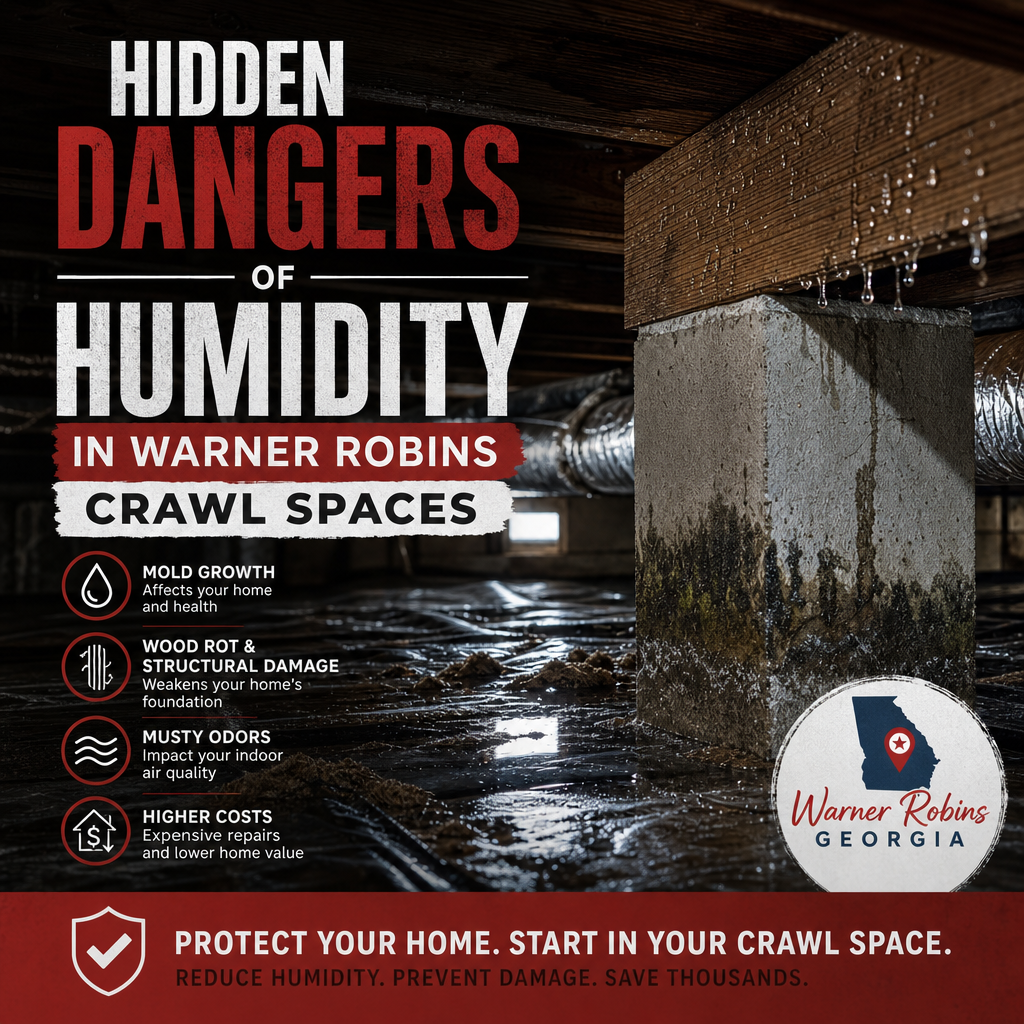
Understanding the hidden dangers of humidity in Warner Robins crawl spaces is the first step toward protecting your property. What starts as a small moisture issue can lead to mold growth, wood rot, pest infestations, and higher energy bills.
Why Crawl Space Humidity Is Such a Problem
Crawl spaces are naturally vulnerable to moisture. They sit close to the ground, which means they can absorb humidity from the soil, outside air, and even plumbing leaks. In warm climates like Middle Georgia, the air often carries a lot of moisture. When humid outdoor air enters a cooler crawl space, condensation can form on surfaces, insulation, and framing materials.

That moisture does not just disappear. It lingers in wood, insulation, and air pockets, creating the perfect environment for long-term damage.
Common causes of excess humidity include:
- Poor ventilation
- Open or damaged crawl space vents
- Ground moisture evaporating from exposed soil
- Plumbing leaks
- Drainage problems around the foundation
- Missing or damaged vapor barriers
Even if the crawl space looks dry at first glance, humidity can still be present at levels high enough to cause trouble.
Mold Growth and Musty Odors
One of the biggest risks of crawl space humidity is mold. Mold thrives in damp, dark areas with poor airflow. A humid crawl space provides exactly that. Once mold begins to grow under your home, it can spread quickly to wood framing, insulation, and other materials.
Mold does not always stay confined to the crawl space. Its spores can move upward into the living areas of the house through a process known as the stack effect. As warm air rises through the home, it can carry crawl space air with it, including mold spores and musty odors.
Signs of mold-related problems may include:
- A persistent musty smell indoors
- Visible mold on floor joists or insulation
- Allergy symptoms that worsen at home
- Dark spots or staining in the crawl space
Because mold often grows out of sight, homeowners may not discover it until it has already caused significant damage.
Wood Rot and Structural Damage
Wood and moisture do not mix well over time. When humidity stays high in a crawl space, the wooden beams, joists, and subfloor can absorb moisture and begin to weaken. This process, known as wood rot, can compromise the structural integrity of your home.
In some cases, the damage happens slowly and silently. You may not notice soft spots in the floor or sagging until the problem has advanced. By then, repairs can be much more complicated and costly.
A humid crawl space can lead to:
- Warped or softened wood framing
- Uneven floors
- Cracks in drywall
- Doors and windows that stick
- Increased risk of long-term structural issues
Protecting the crawl space from excess humidity helps preserve the strength of the home from the ground up.
Pest Problems Become More Likely
Moist crawl spaces also attract pests. Insects, rodents, and other unwanted animals are drawn to damp, sheltered environments. Once they get in, they may damage insulation, chew on wiring, or leave behind droppings that affect indoor air quality.
Termites, in particular, are a major concern. These pests are often attracted to moist wood and can cause serious structural damage before they are detected. Other pests, such as cockroaches and silverfish, also thrive in humid conditions.
Keeping crawl space humidity under control makes the area less inviting to pests and reduces the chance of infestations.
Poor Indoor Air Quality
Many homeowners are surprised to learn that the air in the crawl space can affect the air they breathe upstairs. In fact, a large portion of the air inside a home may come from below. If that air is damp, moldy, or contaminated, it can circulate throughout the house.
This can be especially concerning for people with asthma, allergies, or respiratory sensitivities. High humidity in crawl spaces can contribute to:
- Increased dust mite activity
- Mold spore circulation
- Strong odors in the home
- Higher allergy and asthma triggers
Improving crawl space conditions can make the whole house feel fresher and healthier.
Rising Energy Costs
Humidity does more than damage materials. It also makes your HVAC system work harder. Moist air is more difficult to cool, so your air conditioner has to use extra energy to maintain a comfortable indoor temperature. If the crawl space is humid, that moisture can also migrate into the home and make rooms feel sticky even when the thermostat is set lower.
This leads to:
- Higher utility bills
- More strain on HVAC equipment
- Uneven temperature control
- Reduced comfort during hot months
A drier crawl space can help improve energy efficiency and reduce wear on your system.
How to Protect Your Crawl Space
The good news is that humidity problems can be managed with the right approach. The goal is to keep moisture out, reduce dampness, and create a stable environment beneath your home.
Effective solutions often include:
- Installing a sealed vapor barrier
- Repairing drainage issues around the foundation
- Sealing crawl space vents if needed
- Fixing plumbing leaks promptly
- Using a dehumidifier designed for crawl spaces
- Scheduling regular inspections for early warning signs
In many cases, a professional assessment is the best way to determine which moisture control methods will work for your home.
Protecting Your Home Starts Below the Floor
The hidden dangers of humidity in Warner Robins crawl spaces are easy to ignore until the damage shows up upstairs. Mold, wood rot, pests, and poor air quality can all begin in the crawl space and spread throughout the home. By addressing humidity early, homeowners can protect their structure, improve comfort, and avoid costly repairs.
A healthy home starts with a dry crawl space. Keeping moisture under control is one of the smartest ways to preserve your investment and create a safer living environment for years to come.