

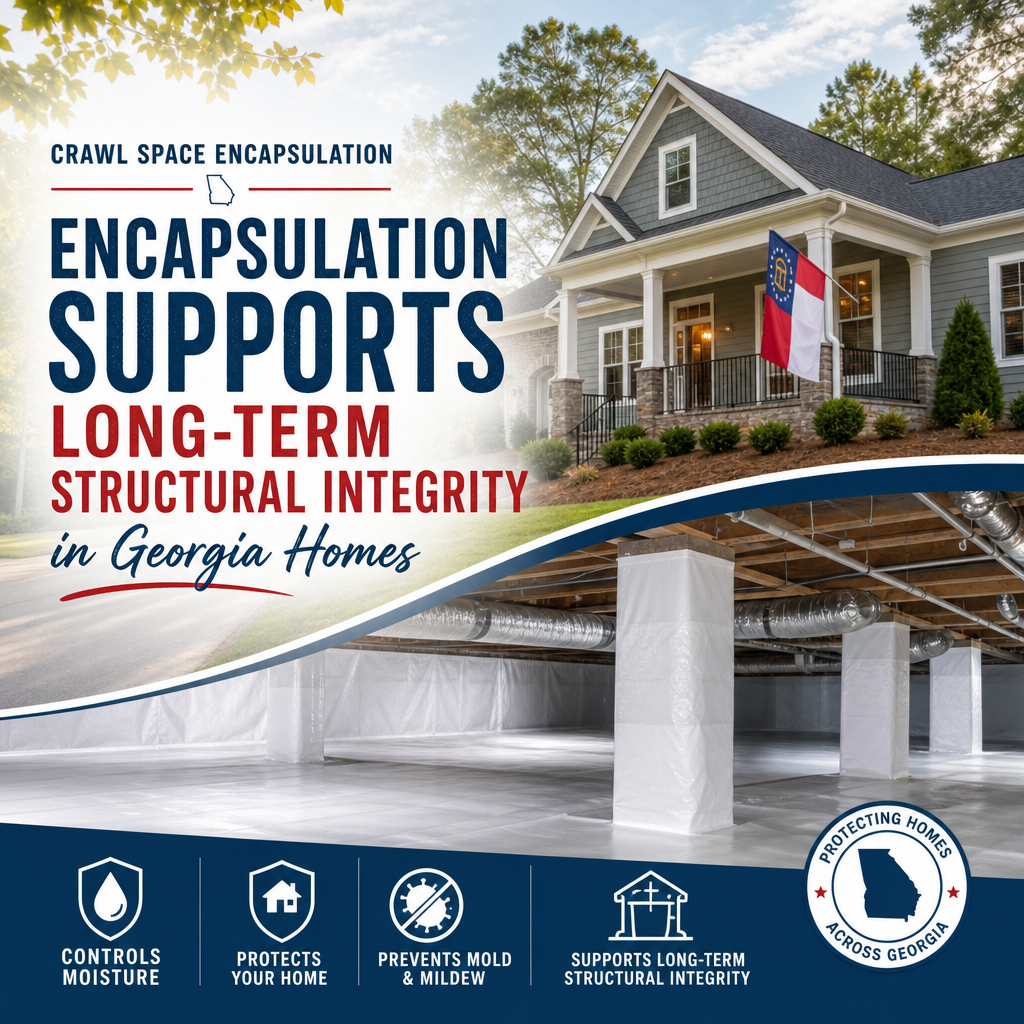
Encapsulation Supports Long-Term Structural Integrity in Georgia Homes
How Encapsulation Supports Long-Term Structural Integrity in Georgia Homes
Georgia homeowners know that heat, humidity, and heavy seasonal rain can be tough on a house. Over time, moisture does more than create a damp crawl space or musty smell. It can quietly weaken the materials that hold a home together. That is where encapsulation plays an important role.
Encapsulation is the process of sealing a crawl space or similar under-home area with a vapor barrier, insulation, drainage improvements, and air sealing. Done correctly, it helps control moisture, improve air quality, and protect the home’s structure for the long term. For homes in Georgia, where humidity is a constant challenge, this can be one of the smartest investments a homeowner can make.
Why Moisture Is a Structural Threat
Moisture is one of the biggest enemies of a home’s structural integrity. When humid air enters a crawl space, it can lead to condensation on wood, insulation, and ductwork. When water from the soil or rain enters the area, the damage can be even greater.

Over time, excess moisture can cause:
- Wood rot in floor joists and support beams
- Rust and corrosion on metal fasteners and HVAC components
- Mold growth on organic materials
- Insulation deterioration
- Settlement or sagging caused by weakened framing
In Georgia’s climate, these problems often develop slowly. Homeowners may not notice them until they see uneven floors, soft spots, or visible damage. Encapsulation helps reduce these risks before they become expensive repairs.
How Encapsulation Works
Encapsulation creates a controlled environment beneath the home. Instead of allowing outside air and ground moisture to move freely through the crawl space, the area is sealed and managed.
A typical encapsulation system may include:
Vapor Barrier Installation
A heavy-duty vapor barrier is placed on the crawl space floor and sometimes up the walls. This barrier blocks moisture from the soil and helps keep humidity levels lower.
Sealing Vents and Openings
Traditional crawl spaces often have vents that allow outside air to circulate. In Georgia, that air is usually warm and humid. Sealing vents helps prevent moisture-laden air from entering the space.
Insulation and Air Sealing
Proper insulation and air sealing help stabilize temperatures and reduce condensation. This protects both the crawl space and the flooring system above it.
Drainage and Dehumidification
If groundwater or standing water is an issue, drainage solutions may be added. A dehumidifier can also help maintain safe humidity levels year-round.
Together, these components create a dry, stable environment that supports the structure above.
The Connection Between Encapsulation and Structural Integrity
Encapsulation does not just address surface-level symptoms. It protects the materials that carry the weight of the home.
Protecting Wood Framing
Floor joists, beams, and subflooring are often made of wood. When these materials remain damp for long periods, they can weaken and lose strength. Encapsulation helps keep them dry, which preserves their load-bearing ability.
Reducing Mold and Rot
Mold and rot thrive in dark, humid spaces. Once they start spreading, they can compromise the integrity of wooden framing and subfloor materials. By controlling moisture, encapsulation makes it much harder for these issues to develop.
Supporting Foundation Stability
Excessive moisture around and under a home can affect soil conditions. In some cases, this may contribute to shifting, uneven settling, or pressure against foundation walls. Encapsulation works best when paired with proper drainage, helping maintain more consistent conditions around the foundation.
Extending the Life of HVAC and Mechanical Systems
Crawl spaces often contain ductwork, plumbing, and electrical components. When these systems are exposed to moisture, they degrade faster. Keeping the area sealed can help extend their lifespan and reduce repair needs.
Why Georgia Homes Benefit More Than Most
Georgia’s weather makes encapsulation especially valuable. High humidity, long warm seasons, and frequent rain create ideal conditions for crawl space moisture problems.
Homes in coastal, southern, and central parts of the state are especially vulnerable, but even properties in drier regions can experience moisture buildup during humid months. Because outdoor air often contains more moisture than expected, vented crawl spaces can actually make the problem worse rather than better.
Encapsulation helps Georgia homes by:
- Reducing humidity in the crawl space
- Preventing seasonal moisture spikes
- Limiting mold growth
- Protecting wooden structural components
- Improving overall home comfort and efficiency
This is not just about comfort. It is about preserving the home’s long-term strength.
Signs a Home May Need Encapsulation
Homeowners do not always see structural damage right away, but there are warning signs that moisture may already be affecting the home.
Look for:
- Musty odors indoors
- Visible mold or mildew in the crawl space
- Warped floors or sticking doors
- High indoor humidity
- Standing water or damp soil beneath the house
- Rusted metal components
- Pest activity in the crawl space
If any of these issues are present, an inspection can help determine whether encapsulation would be beneficial.
A Smart Investment for Long-Term Protection
Encapsulation is often thought of as a moisture control solution, but its real value goes much deeper. By keeping crawl spaces dry and stable, it protects the framing, insulation, foundation, and systems that keep a home safe and livable.
For Georgia homeowners, that means fewer moisture-related repairs, better structural protection, and improved long-term performance. A well-encapsulated home is less likely to suffer from hidden damage that can weaken the structure over time.
Final Thoughts
In a humid climate like Georgia’s, moisture management is essential. Encapsulation supports long-term structural integrity by preventing the slow, costly damage that moisture can cause below the home. It protects the wood, metal, insulation, and foundation systems that every house depends on.
For homeowners who want to preserve their investment, improve durability, and reduce future repair risks, encapsulation is more than a maintenance upgrade. It is a structural safeguard.
