
Pest Prevention Starts in the Crawl Space: Expert Tips for Warner Robins
Pest Prevention Starts in the Crawl Space: Warner Robins Expert Tips
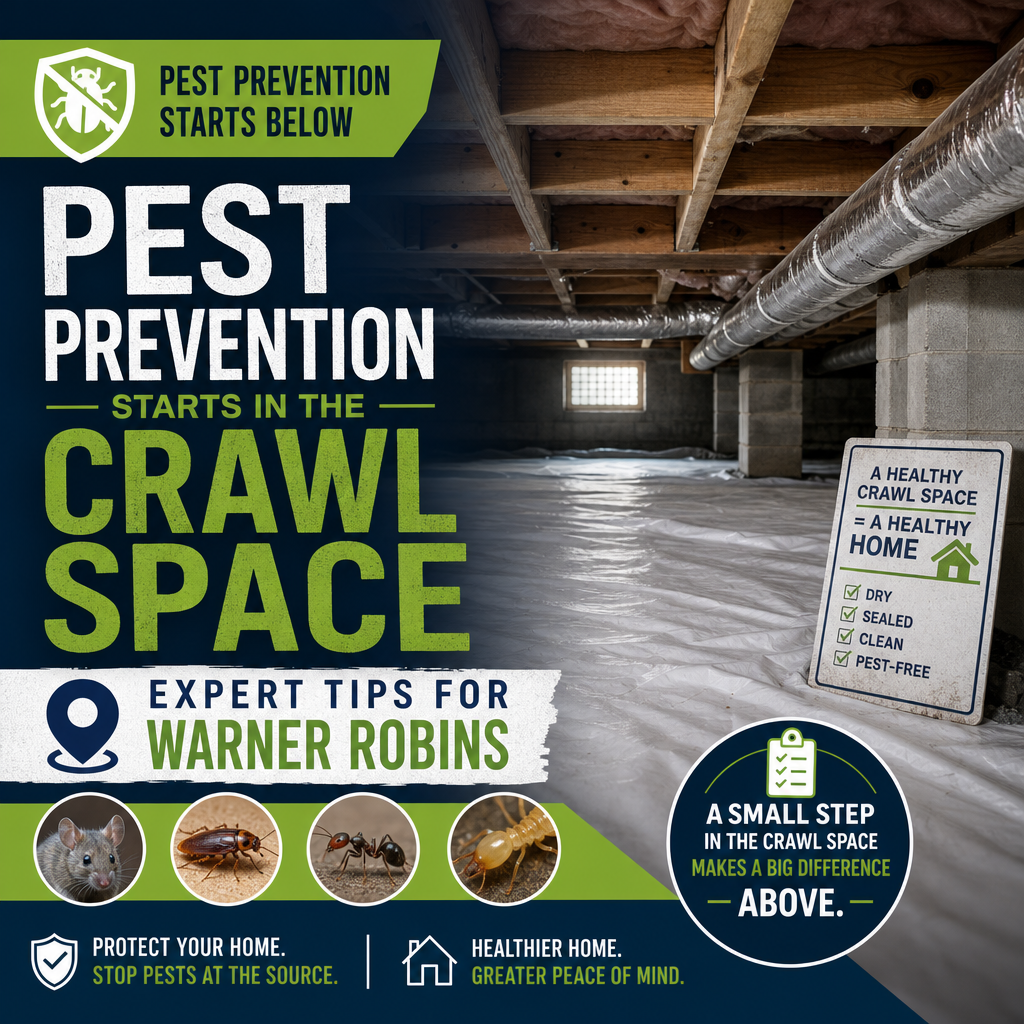
When homeowners think about pest control, they usually picture traps, sprays, or treatments around the kitchen and basement. But one of the most overlooked problem areas is beneath the house. In many Georgia homes, pest prevention starts in the crawl space, where moisture, warmth, and hidden access points create the perfect environment for insects and rodents.
For homeowners in Warner Robins, paying attention to the crawl space can make a big difference. Preventing pest problems early is often easier and less expensive than dealing with an infestation later. A clean, dry, sealed crawl space helps protect both your home and your peace of mind.
Why the Crawl Space Attracts Pests
Crawl spaces naturally offer shelter. They are dark, rarely disturbed, and often damp. That combination makes them appealing to many common pests, including:

- Ants
- Roaches
- Spiders
- Termites
- Rodents
- Silverfish
- Centipedes
Moisture is one of the biggest reasons pests move in. Leaky pipes, poor drainage, and humid air can create a comfortable habitat for insects and nesting animals. Once pests establish themselves under the home, they can spread into walls, insulation, and living spaces.
In Warner Robins, the warm climate can make these conditions even more attractive. That is why crawl space maintenance should be part of every homeowner’s pest prevention plan.
Start With Moisture Control
If you want to keep pests out, start by removing what attracts them. In most crawl spaces, that means controlling moisture.
Check for Standing Water
Look for puddles, damp soil, or signs of water intrusion after heavy rain. Standing water can come from poor drainage, broken pipes, or foundation issues. Even small amounts of water can lead to bigger problems over time.
Fix Leaks Quickly
A slow plumbing leak may not seem urgent, but pests notice it right away. Repair leaking pipes, condensation lines, and HVAC issues as soon as possible. The drier the crawl space, the less inviting it becomes.
Improve Ventilation and Drainage
Good airflow and proper drainage can help reduce humidity. Some homes may benefit from a vapor barrier or encapsulation system, which helps seal out ground moisture and creates a less pest-friendly environment.
Seal Entry Points Before Pests Find Them
Pests do not need a large opening to get inside. Mice can squeeze through very small gaps, and insects can enter through cracks that are easy to miss.
Inspect the crawl space for:
- Gaps around pipes and wiring
- Cracks in foundation walls
- Open vents
- Loose access doors
- Damaged screens
- Unsealed joints or holes
Use durable materials to seal these openings. Caulk, steel wool, mesh, and weather-resistant sealants can help block access. For larger issues, professional repairs may be necessary.
Sealing entry points is one of the most effective ways to reduce pest activity before it starts.
Keep the Area Clean and Uncluttered
A crawl space full of debris gives pests places to hide and nest. Old wood, cardboard, insulation scraps, and forgotten storage items can all become part of the problem.
Remove Food Sources
Pests are drawn to anything edible, including pet food, spilled grain, or organic debris. Keep the crawl space free of anything that can serve as food.
Clear Out Nesting Material
Paper, fabric, insulation, and stored boxes can all provide nesting material for rodents and insects. Keeping the space clean reduces the number of hiding spots available.
Avoid Storing Items Below the House
If possible, avoid using the crawl space for storage. Keeping the area open and accessible makes inspections easier and helps spot issues sooner.
Watch for Early Warning Signs
Pest problems are much easier to handle when caught early. Regular inspection can help homeowners spot trouble before it spreads.
Look for signs such as:
- Droppings
- Chewed wires or insulation
- Grease marks on surfaces
- Mud tubes on foundation walls
- Shed insect wings
- Unusual odors
- Noises from scratching or movement
If you notice any of these warning signs, take action quickly. A small issue in the crawl space can turn into a larger infestation if ignored.
Schedule Routine Professional Inspections
Even careful homeowners can miss hidden problems. A pest control professional can inspect areas that are difficult to access and identify conditions that may attract pests.
Routine inspections are especially helpful in older homes or properties with recurring moisture issues. In Warner Robins, local pest experts understand the regional challenges that come with heat, humidity, and seasonal pest activity. They can recommend solutions tailored to the home’s structure and environment.
Professional help may include:
- Moisture assessments
- Entry point sealing
- Termite monitoring
- Rodent exclusion
- Crawl space treatment plans
Build a Long-Term Prevention Plan
The best pest control strategy is ongoing, not one-time. When you keep the crawl space dry, sealed, and clean, you make it much harder for pests to settle in.
A good prevention plan includes:
- Inspecting the crawl space regularly
- Fixing moisture issues promptly
- Sealing cracks and openings
- Removing debris and clutter
- Scheduling professional checkups
These simple steps can save time, money, and stress in the long run.
Protect Your Home From the Ground Up
Pests often begin where homeowners rarely look. That is why pest prevention starts in the crawl space. By controlling moisture, sealing access points, and keeping the area clean, Warner Robins homeowners can reduce the risk of infestations and protect their property from hidden damage.
A healthy crawl space supports a healthier home. Start below the floor, and you will be one step ahead of pest problems before they begin.