
Top Moisture Problems in Warner Robins Crawl Spaces and Fixes
Top Moisture Problems Affecting Warner Robins Crawl Spaces (And How to Fix Them)
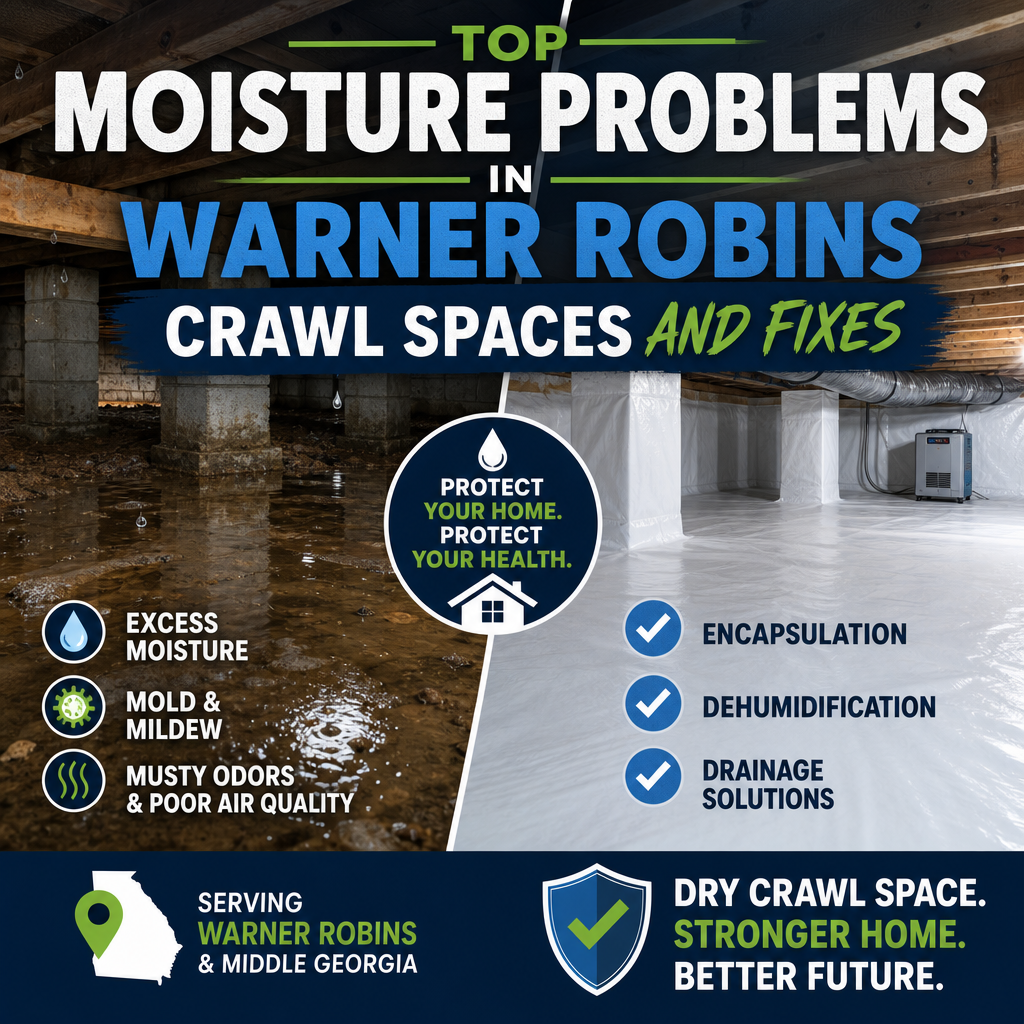
Moisture is one of the biggest threats to homes in Middle Georgia, and crawl spaces often take the hardest hit. In Warner Robins, high humidity, heavy summer rain, and warm temperatures create the perfect environment for damp crawl spaces. Left unchecked, moisture can lead to mold growth, wood rot, poor air quality, and higher energy bills.
Understanding the most common moisture problems in Warner Robins crawl spaces is the first step toward protecting your home. Here are the issues homeowners run into most often, along with practical ways to fix them.
1. High Humidity in the Crawl Space
Warner Robins experiences long stretches of humid weather, and that moisture often finds its way into crawl spaces. Even if there is no standing water, excess humidity can still cause major problems. When the relative humidity stays too high, wooden supports absorb moisture, insulation becomes less effective, and mold can start growing on surfaces.

How to fix it:
- Install a crawl space dehumidifier to control moisture levels
- Seal vents and openings that allow humid outdoor air inside
- Add a vapor barrier over the ground to reduce evaporation from soil
- Monitor humidity regularly to catch problems early
A crawl space dehumidifier is especially useful during hot, muggy months when the air outside carries more moisture than many homeowners expect.
2. Ground Moisture and Evaporation
One of the most common moisture sources in crawl spaces is the exposed soil beneath the home. Moisture rises naturally from the ground and increases humidity inside the crawl space. In Warner Robins, where rainy periods can leave the soil saturated, this problem gets worse fast.
How to fix it:
A quality vapor barrier is one of the best solutions for this issue. Covering the soil with thick plastic sheeting helps block moisture from evaporating into the crawl space air.
For best results:
- Use a vapor barrier that covers the entire ground surface
- Seal seams properly
- Extend the barrier up the crawl space walls if possible
- Combine it with dehumidification for long-term control
This simple upgrade can make a big difference in reducing dampness and improving indoor comfort.
3. Standing Water After Heavy Rain
Heavy rain and poor drainage can cause water to collect in crawl spaces, especially in low-lying areas. If gutters overflow, downspouts discharge too close to the foundation, or the soil slopes toward the house, water can make its way underneath the home. Standing water is a serious issue because it can quickly lead to structural damage and pest activity.
How to fix it:
- Clean gutters regularly so water flows away from the home
- Extend downspouts several feet from the foundation
- Improve grading around the house so water drains away
- Install a sump pump if flooding is a recurring problem
- Seal foundation cracks that may allow water intrusion
If water enters the crawl space repeatedly, drainage improvements should be a top priority before adding other moisture-control measures.
4. Poor Ventilation
Many older homes were built with crawl space vents meant to improve airflow. In a humid climate like Warner Robins, though, those vents can actually make moisture problems worse by letting in warm, damp outdoor air. When that air meets cooler surfaces in the crawl space, condensation forms.
How to fix it:
- Close off crawl space vents if the space is being conditioned or encapsulated
- Use a sealed crawl space design to reduce outside air intrusion
- Pair air sealing with a vapor barrier and dehumidifier
- Check for areas where outside air is leaking in around doors, pipes, or foundation openings
A controlled crawl space environment is much easier to manage than one that constantly pulls in humid outside air.
5. Condensation on Pipes and Ductwork
When warm, moist air enters a crawl space, it can condense on cooler plumbing and HVAC components. This leads to dripping water, rust, and eventual damage. Ductwork in particular can suffer if moisture builds up around it, reducing system efficiency and increasing repair costs.
How to fix it:
- Insulate exposed pipes and ductwork
- Reduce crawl space humidity with a dehumidifier
- Seal air leaks that allow humid air to enter
- Make sure HVAC ducts are properly sealed and in good condition
Condensation is often a warning sign that the crawl space environment is not being controlled well enough.
6. Mold and Musty Odors
Once moisture becomes a regular issue, mold and mildew can follow. These growths often produce musty odors that move from the crawl space into the rest of the home. In some cases, homeowners notice the smell before they realize there is a moisture problem below.
How to fix it:
- Address the source of moisture first
- Remove any damaged insulation or mold-contaminated materials
- Seal and encapsulate the crawl space if needed
- Run a dehumidifier to keep conditions dry
- Have a professional inspect for hidden mold growth if odors persist
Mold won’t go away on its own. Eliminating moisture is the only reliable long-term solution.
Protecting Your Warner Robins Home
The most effective way to handle Top Moisture Problems Affecting Warner Robins Crawl Spaces is to take a full-system approach. That means stopping water intrusion, blocking ground moisture, sealing air leaks, and controlling humidity. When these steps work together, your crawl space stays drier, cleaner, and healthier.
A dry crawl space can help protect your foundation, improve indoor air quality, and reduce the risk of expensive repairs. If you’ve noticed damp insulation, musty smells, or visible water under your home, it’s worth taking action sooner rather than later. In Warner Robins, moisture problems rarely stay small for long.