
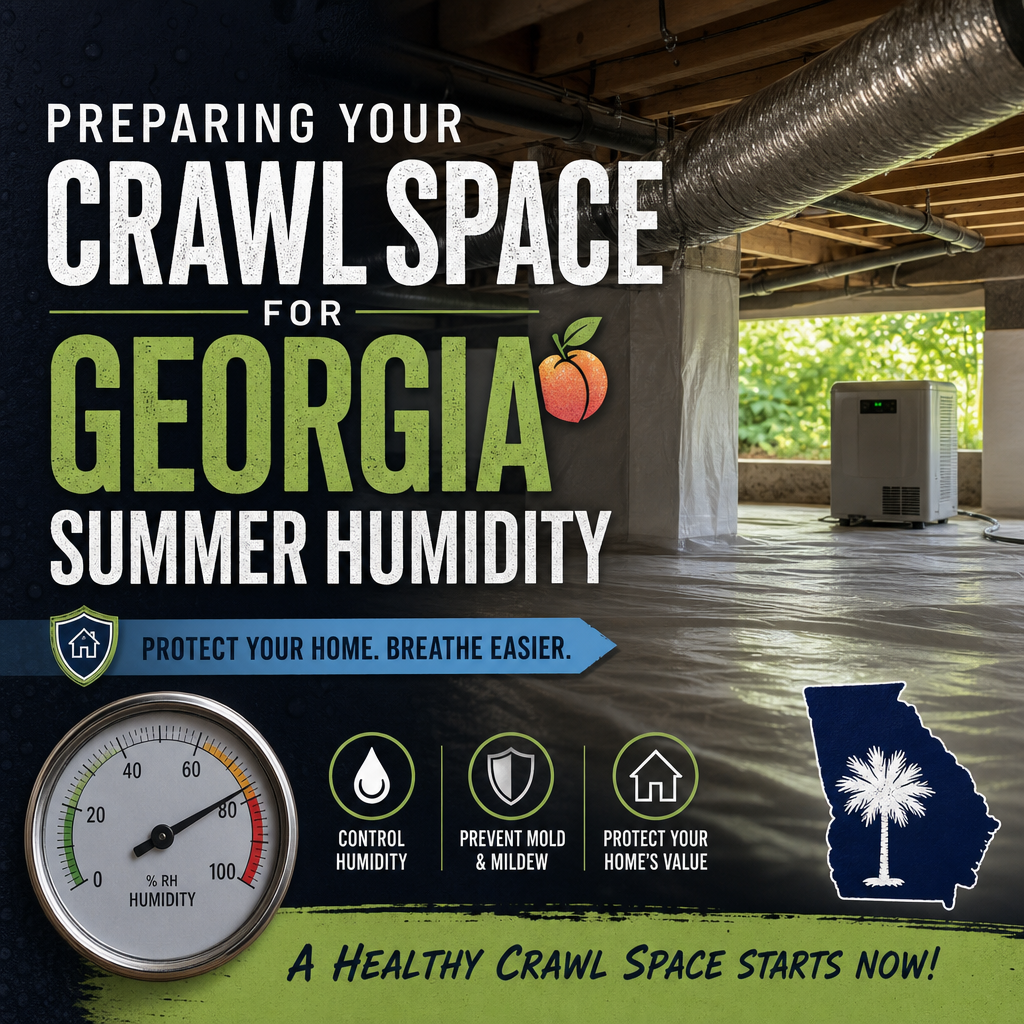
Preparing Your Crawl Space for Georgia Summer Humidity
Seasonal Guide: Preparing Your Crawl Space for Georgia’s Summer Humidity
Georgia summers are known for heat, afternoon storms, and heavy humidity. While most homeowners focus on cooling the living space, the crawl space often gets overlooked. That’s a mistake. Moisture below your home can lead to mold, wood damage, pest activity, and higher energy bills.
If you want to protect your home during the hottest months, it helps to take a few smart steps early. This seasonal guide will walk you through how to prepare your crawl space for Georgia’s summer humidity and reduce the risk of costly moisture problems.
Why Summer Humidity Is Such a Problem
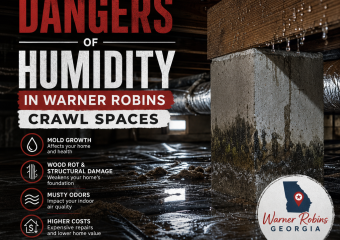
Warm air naturally holds more moisture, and Georgia’s summer weather creates the perfect conditions for damp crawl spaces. When humid air enters a cooler crawl space, condensation can form on wood, insulation, and ductwork.

That moisture can cause several issues:
- Mold and mildew growth
- Rotting floor joists and subflooring
- Musty odors inside the home
- Increased attraction for termites and other pests
- Reduced HVAC efficiency
Even if the crawl space looks fine from the outside, hidden moisture can build up quickly during peak summer months.
Inspect the Crawl Space Before Humid Weather Peaks
A good seasonal prep starts with a thorough inspection. Look for signs that moisture may already be a problem or that your crawl space is vulnerable to summer humidity.
What to Check
Walk through the space carefully, or hire a professional if access is limited. Pay attention to:
- Standing water or damp soil
- Condensation on pipes or insulation
- Sagging or wet insulation
- Rust on metal components
- Mold spots or discoloration on wood
- Gaps around vents, pipes, or entry points
- Cracks in the foundation or walls
If you notice any of these warning signs, address them before humidity becomes more intense. Small problems can grow fast once summer weather settles in.
Improve Drainage Around the Home
Moisture control starts outside the crawl space. If water collects near your foundation, it can easily find its way underneath the home. During Georgia’s rainy season, poor drainage is one of the most common causes of crawl space moisture.
Simple Drainage Improvements
To help keep water away from your crawl space:
- Clean gutters and downspouts regularly
- Extend downspouts at least several feet away from the house
- Regrade soil so it slopes away from the foundation
- Repair leaking exterior faucets or irrigation lines
- Clear debris from drains and splash blocks
These steps help reduce the amount of water that can seep into the crawl space after heavy rain.
Seal Air Leaks and Gaps
Humid outdoor air can enter through openings in your crawl space, especially in older homes. Sealing these leaks is one of the best ways to control moisture and improve energy efficiency.
Common Areas to Seal
Focus on places where air and moisture can enter, such as:
- Around plumbing penetrations
- Electrical openings
- Foundation cracks
- Crawl space access doors
- Rim joists and sill plates
Use the right materials for the job. In many cases, caulk, spray foam, weatherstripping, or sealant can help close gaps. If the structure has larger problems, a professional inspection may be needed.
Check Ventilation and Humidity Control
Many homeowners assume crawl space vents are enough to solve moisture problems. In Georgia’s humid climate, that’s not always true. Bringing in outside air can sometimes make the space wetter, not drier.
Better Moisture Control Options
Depending on your home, the crawl space may benefit from:
- Vapor barriers
- Encapsulation
- Dehumidifiers
- Sealed vents
- Conditioned air solutions
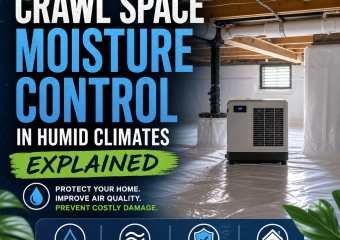
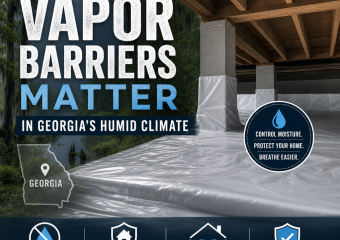
A vapor barrier helps block ground moisture, while encapsulation creates a more controlled environment. A dehumidifier can also help keep humidity levels in check during especially muggy months.
Aim to keep crawl space humidity low enough to discourage mold and condensation. In many homes, professional moisture control is the most effective long-term solution.
Replace Damaged Insulation
Summer humidity can ruin old or poorly installed insulation. Wet insulation loses its effectiveness and can trap moisture against wood surfaces, making the problem worse.
Signs Insulation Needs Attention
Look for insulation that is:
- Hanging loose
- Stained or moldy
- Wet or compressed
- Falling from the subfloor
If insulation is damaged, replace it with materials suited for humid conditions. Proper installation matters just as much as the material itself. Insulation should help regulate temperature without trapping excess moisture.
Watch for Pest Activity
Pests love damp, dark crawl spaces. High humidity can attract termites, rodents, and insects looking for shelter. Once inside, they can damage wood, wiring, and insulation.
Pest Prevention Tips
To reduce the risk of infestations:
- Keep the crawl space dry
- Seal entry points
- Remove debris and stored items
- Trim vegetation near the home
- Schedule pest inspections if needed
A dry crawl space is much less appealing to pests than one with standing moisture or soft wood.
Keep Up With Seasonal Maintenance
Preparing your crawl space for Georgia’s summer humidity is not a one-time task. Ongoing maintenance helps you catch small issues before they become major repairs.
Create a Summer Maintenance Routine
Check your crawl space at least once during the season, and after major storms. Make a habit of looking for:
- New moisture spots
- Musty smells
- Pest signs
- Damaged seals or barriers
- HVAC condensation leaks
A few minutes of inspection can save you from expensive structural or mold-related repairs later.
Protect Your Home Before Humidity Does Damage
Georgia’s summer humidity can be hard on any home, but the crawl space is especially vulnerable. By improving drainage, sealing air leaks, controlling moisture, and staying alert to warning signs, you can reduce the chance of damage and keep your home healthier.
A dry crawl space supports better air quality, lower energy costs, and a stronger foundation. With the right seasonal maintenance, your home will be better prepared for the long, humid Georgia summer ahead.