
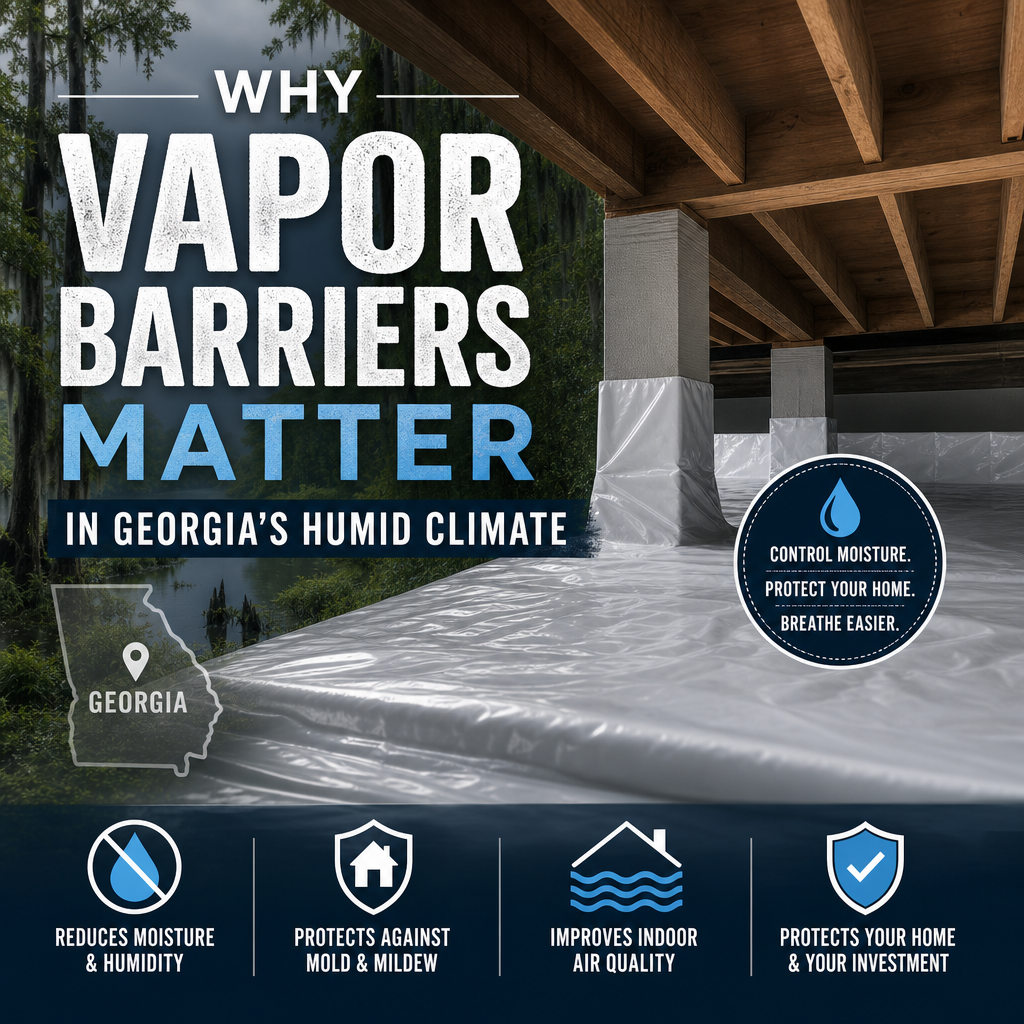
Why Vapor Barriers Matter in Georgia’s Humid Climate
Why Vapor Barriers Are Critical in Georgia’s Humid Climate
Georgia’s warm temperatures, heavy rainfall, and long humid seasons create the perfect environment for moisture problems in homes. That moisture can quietly seep into crawl spaces, walls, and attics, leading to mold growth, wood rot, poor air quality, and higher energy bills. One of the most effective ways to protect a home is by installing a vapor barrier.
A vapor barrier acts as a shield against water vapor moving through building materials and into vulnerable areas. In a state like Georgia, where humidity is often high for much of the year, this simple layer can make a major difference in comfort, efficiency, and long-term home health.
What a Vapor Barrier Does
A vapor barrier is a material designed to reduce the movement of moisture through floors, walls, and foundations. It is commonly made from plastic sheeting or specialized membrane products and is often installed in crawl spaces, attics, and basements.

Its job is not to stop liquid water from flooding a space. Instead, it limits the transfer of water vapor, which can enter from the soil, outside air, or condensation. In humid climates, that moisture can build up quickly if there is no protection in place.
Common areas where vapor barriers are used
- Crawl spaces
- Under concrete slabs
- Basement walls
- Attics
- Behind interior walls in certain construction types
Why Georgia Homes Need Extra Moisture Protection
Georgia’s climate is especially challenging because humidity does not just come from rain. Warm air naturally holds more moisture, and that moisture can enter a home through small gaps, porous materials, or unsealed ground in crawl spaces. When warm, damp air meets cooler surfaces, condensation forms.
This is where a vapor barrier becomes essential. It helps reduce the amount of moisture that reaches structural components and insulation. Without it, homes may experience issues that develop slowly but become expensive over time.
Moisture problems common in Georgia
- Mold and mildew growth
- Musty odors
- Wood damage and structural weakening
- Rust on metal components
- Reduced insulation performance
- Increased indoor humidity
The Risks of Skipping a Vapor Barrier
Homeowners sometimes overlook vapor barriers because the results are not always immediate. But over months and years, unchecked moisture can cause serious damage.
1. Mold and mildew
Mold thrives in damp, dark spaces. A crawl space with exposed dirt and no vapor barrier can become a breeding ground for mold spores that spread into the rest of the home.
2. Rotting wood
Floor joists, sill plates, and subflooring can absorb moisture from the air and ground. Over time, that leads to wood rot, which can compromise the strength of the home.
3. Higher energy costs
Moisture makes it harder for HVAC systems to control indoor temperature and humidity. As a result, your system may run longer and use more energy.
4. Poor indoor air quality
In many homes, air from the crawl space rises into the living area. If that space is damp, it can bring unpleasant odors, allergens, and mold particles indoors.
Where Vapor Barriers Make the Biggest Difference
Some parts of the home are more vulnerable to moisture than others. In Georgia, crawl spaces are one of the most important places to install a vapor barrier. Bare soil under a home constantly releases moisture into the air, especially during rainy weather and hot summers.
Attics can also benefit, particularly when warm air from inside the home rises and condenses on cooler surfaces. In new construction, vapor barriers may be part of a broader moisture-control strategy that includes insulation, ventilation, and sealing air leaks.
High-priority areas for installation
- Exposed dirt crawl spaces
- Homes with standing moisture or high humidity
- Older homes with minimal moisture protection
- Areas prone to condensation or musty odors
How Vapor Barriers Help Improve Home Comfort
Beyond protecting the structure, a vapor barrier can also improve day-to-day comfort. When moisture levels are lower, the air feels less sticky and the home is easier to cool. This is especially valuable during Georgia’s long summer season, when humidity can make even mild temperatures feel uncomfortable.
A drier crawl space can also reduce the workload on your air conditioning system. That may help create more consistent indoor temperatures and lower utility bills.
Choosing the Right Vapor Barrier
Not all vapor barriers are the same. The right product depends on the space, the level of moisture, and the type of home. Thicker materials are often preferred for crawl spaces because they hold up better against tears and wear. Seams should be sealed properly, and the barrier should cover as much exposed ground and wall area as possible for the best results.
Professional installation is often the best choice because it ensures the barrier is placed correctly and integrated with other moisture-control measures.
A Smart Investment for Georgia Homeowners
In a humid state like Georgia, moisture control is not optional—it is part of protecting your home. A vapor barrier helps block excess moisture before it can damage structural materials, encourage mold growth, or raise energy costs. It is a relatively simple improvement, but one that can deliver long-term value.
By reducing humidity at the source, homeowners can protect their investment, improve indoor comfort, and support a healthier living environment. For Georgia homes, that makes a vapor barrier one of the smartest defenses against climate-related moisture problems.