Pest Control and Encapsulation for Stronger Home Protection
How Pest Control and Encapsulation Work Together for Stronger Home Protection
Protecting a home from pests is not just about reacting when ants, roaches, or rodents show up. It is about creating a long-term barrier that keeps unwanted invaders out and makes your home less welcoming to them in the first place. That is why pest control and encapsulation work so well together. When used as part of a complete home protection plan, they help reduce pest activity, improve indoor conditions, and support a healthier living environment.
What Is Pest Control?
Pest control is the process of managing and eliminating insects, rodents, and other pests that can damage property or spread health risks. It can include:
- Inspection and monitoring
- Targeted treatments for active infestations
- Preventive barriers and deterrents
- Ongoing maintenance and follow-up visits
A good pest control plan focuses on both immediate problems and long-term prevention. It addresses the pests you can see, as well as the conditions that attract them.

What Is Encapsulation?
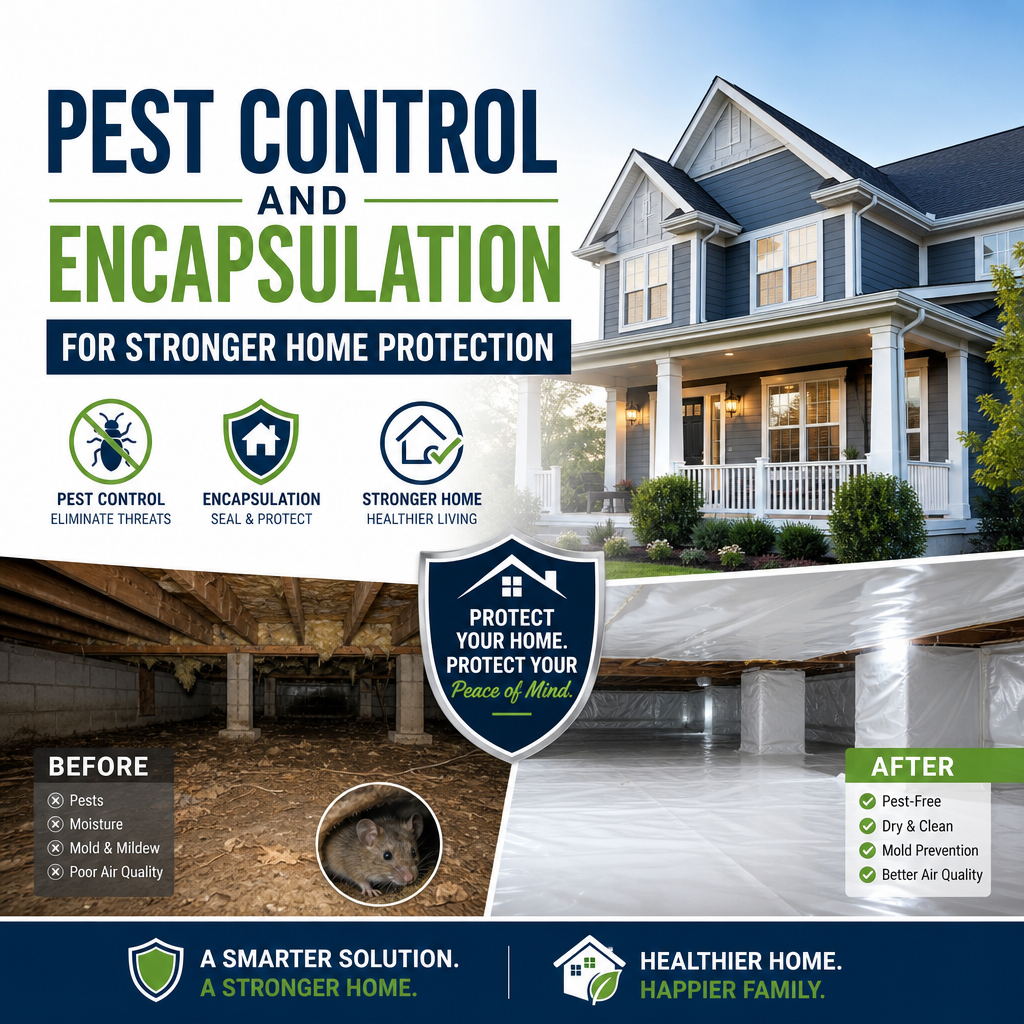
Encapsulation is a protective sealing process often used in crawl spaces and other vulnerable areas of a home. It usually involves covering exposed surfaces with a durable moisture barrier to reduce dampness, mold growth, and air leaks. In many homes, encapsulation helps transform a dark, humid crawl space into a cleaner and more controlled environment.
This matters because many pests thrive in moist, hidden spaces. If a crawl space stays damp, open, and easy to access, it becomes an ideal shelter for insects and rodents.
Why These Two Solutions Work Better Together
Pest control can eliminate an existing infestation, but if the home still has moisture problems, entry points, and favorable nesting areas, pests may return. Encapsulation helps address those underlying conditions. Together, they create a stronger defense.
Here is how they complement each other:
-
Pest control removes the problem.
Treatments reduce current pest populations and stop active damage. -
Encapsulation changes the environment.
Sealing off moisture and exposed surfaces makes the home less attractive to pests. -
Prevention becomes more effective.
With fewer entry opportunities and less humidity, pest treatments last longer. -
The home is easier to maintain.
Clean, sealed spaces are simpler to monitor and less likely to develop recurring issues.
How Moisture Attracts Pests
Many homeowners do not realize how strongly pests are drawn to moisture. Termites, cockroaches, silverfish, ants, and even rodents are often attracted to damp areas because they offer water, shelter, and breeding conditions.
Common moisture-related pest triggers include:
- Leaky pipes
- Standing water
- Poor drainage
- High humidity
- Wet insulation or wood
- Open crawl spaces
Encapsulation helps reduce these triggers by sealing the area and limiting moisture buildup. That means fewer conditions that pests rely on to survive.
Better Protection for Crawl Spaces
Crawl spaces are one of the most common trouble spots in a home. They are often dark, humid, and difficult to inspect regularly. Pests can enter through small openings, build nests, and remain hidden for long periods.
When pest control and encapsulation are used together in a crawl space, the benefits can be significant:
- Fewer insect and rodent hiding places
- Reduced mold and mildew growth
- Less wood rot and structural damage
- Lower chance of repeated infestations
- Improved air quality in the home
Since air from a crawl space can rise into living areas, protecting this space is about more than pest prevention. It can also support overall home comfort.
Signs Your Home May Need Both Services
Some homes clearly need a combined approach. Watch for these warning signs:
- Recurring pests even after treatment
- Musty odors from the crawl space
- Visible moisture or condensation
- Damaged insulation
- Droppings or nesting materials
- Sagging wood or signs of rot
- Increased humidity inside the home
If these issues are present, pest control alone may not solve the problem. Encapsulation can help address the environment that keeps attracting pests.
Long-Term Benefits of Combining the Two
The biggest advantage of using pest control and encapsulation together is long-term protection. Instead of chasing pest problems over and over, homeowners can reduce the chances of infestations before they start.
Some of the main benefits include:
- Stronger protection against pests
- Less risk of moisture damage
- Improved structural preservation
- Better indoor air quality
- Lower maintenance headaches over time
This combination is especially helpful in humid climates or older homes where crawl spaces and basements are more vulnerable.
A Smarter Strategy for Home Protection
A home should be protected from both pests and the conditions that invite them. Pest control handles the immediate threat, while encapsulation helps create a cleaner, drier, and less inviting environment for pests in the future.
When these two solutions work together, they offer more than temporary relief. They provide a smarter, more complete approach to home protection that helps keep your house safer, healthier, and more comfortable year-round.